













Explore our library of webinars, case studies and articles designed to help you solve microbial challenges with clarity and confidence. From practical how-tos to in-depth research, these resources give you the knowledge to make better decisions, faster.
Protect Performance, Preserve Production: The Operator’s Guide to Microbial Risk Management
Bugcount , Genecount , Labs , Polytechnic , Relay ,
Stay ahead of MIC , Keep source water clean , Protect reservoir quality , Prevent biofilm build-up , Optimize biocide performance , Unified testing and reporting ,
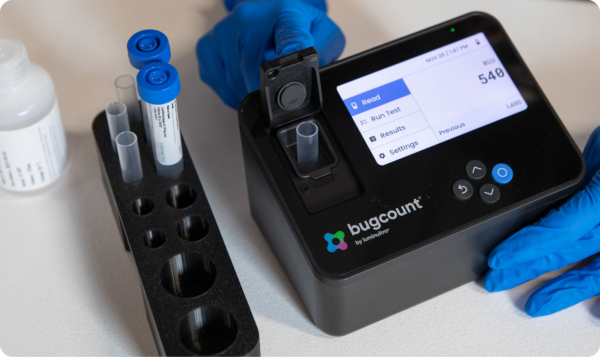
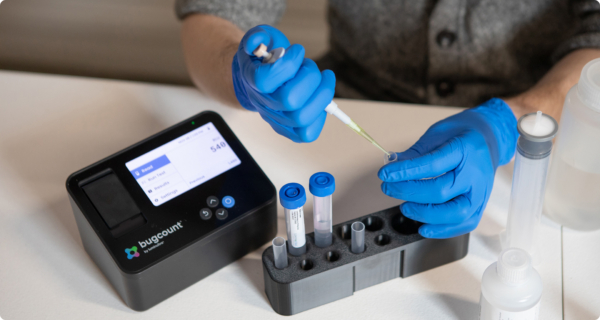
Luminultra introduces the Bugcount® analyzer ATP measurement platform, redefining the standard in microbial testing
The company’s flagship product combines 30 years of microbial expertise with trusted user feedback to produce a next-generation device built to streamline testing, accelerate decisions and strengthen control across critical systems.
Bugcount ,
Wastewater treatment , Drinking water , Legionella management , Microbial contamination , Efficiency loss and biofilm buildup , Biocide management and optimization , Protect product quality , Keep lines running , Stay ahead of MIC , Keep source water clean , Protect reservoir quality , Prevent biofilm build-up , Optimize biocide performance , Commercial aviation , General aviation , Marine , Fuel storage and distribution ,
We bring microbial expertise and deep industry knowledge together to help you solve complex challenges and make confident decisions.


Whether you’re in the lab or in the field, we’re here to help you keep the work on track.

I need help getting started
Have a general inquiry or just need some direction? Send us your question and we’ll get you an answer
I need customer support
Need help with a product or test? Our customer experience team can help


How can you quickly implement ATP Monitoring in your drinking water system?
You’ve likely heard of ATP technology, but may not have had the time to fully explore the value it can bring to your existing microbial monitoring program.

You’ve likely heard of ATP technology, but may not have had the time to fully explore the value it can bring to your existing microbial monitoring program. Here’s a brief overview on how you can use ATP testing to identify and mitigate microbiological issues in your drinking water treatment and distribution system.
Traditional testing methods
If your microbial monitoring toolbox consists of plate counts, like HPCs, and more specific biological tests like Colilert and BART analyses, you’re likely waiting at least 1-2 days for results and missing a large portion of the overall microbial population that’s present in your system. While there is value in the data obtained from these methods, they are not well-suited to assess total microbiological risk or to quickly troubleshoot issues that present themselves.
These limitations are causing more and more water utilities to implement ATP testing because of its ability to quantify the total biological population in less than 5 minutes.
How to incorporate ATP testing into your microbial monitoring program
Here’s a quick guide on how – and where – to incorporate ATP testing into your microbial monitoring program/process:
Distribution system troubleshooting
When utilities experience water quality issues in their distribution system it doesn’t take long for consumers to notice. During periods of increased water quality complaints, ATP testing can immediately be taken into the field to determine whether there is increased microbial growth in the distribution system, identify premise plumbing issues, or to confirm that it’s a non-biological issue. If microbial contamination is detected, ATP allows operators to quickly trace the lines to identify the root cause while still in the field.

Learn how distribution system operators borrowed ATP testing from their treatment plant to identify and repair an un-listed valve in their distribution system that was causing poor water quality and, as a result, reduced water quality complaints.
Confirm water quality after line breaks and repairs
After line breaks, repairs, flushing and troubleshooting activities, distribution operators are typically required to confirm microbial water quality and, in some cases, submit samples for compliance testing. The turn-around time is typically 24 to 48 hours, requiring operators to leave the site and wait for the results. ATP testing allows operators to confirm microbial water quality on-site and ensure that corrective actions were successful to reduce the risk of failed compliance tests.
Identifying fouling in membrane filtration units
One of the major challenges of managing a membrane filtration plant is preventing and treating fouling which reduces treatment efficiency and increases operational costs. By monitoring ATP levels in the influent and permeate, biological fouling can quickly be identified, helping operators determine the appropriate treatment type and cleaning schedule, and highlighting design inefficiencies that increase the fouling rate.
Monitoring biofilters
Monitoring the active microbial population in biologically-active filters through ATP testing directly on the media can help operators who are converting conventional filters, managing optimization trials, or troubleshooting treatment issues.

Source water monitoring
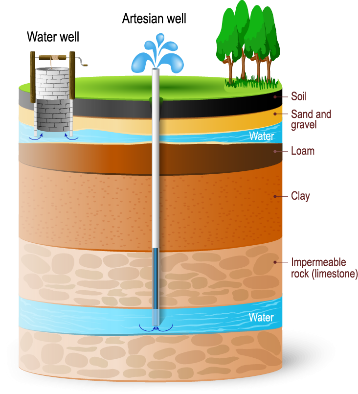
Many utilities experience varied and changing source water quality. ATP testing can help identify changes in the microbiological population that can affect downstream treatment processes. From potential algae growth to contaminated groundwater wells, ATP can help water treatment operators quickly identify and remediate areas of high risk.
Learn how this water treatment plant quickly identified and remediated a contaminated groundwater well that was causing issues in their treatment process and showing no growth with traditional HPCs.

Explore Luminultra resources
Make confident decisions with trusted expertise.
Discover webinars, whitepapers and expert articles focused on microbial control.
Webinar on demand | Using ATP to monitor regrowth in drinking water distribution systems and turning biomass data into better decisions
Bugcount ,
Wastewater treatment ,

Webinar on demand | Seeing what MLSS can’t: Measuring living biomass with ATP
Bugcount , Polytechnic ,
Wastewater treatment ,

Webinar on demand | Better microbial testing for paints and coatings
Bugcount ,
Biocide management and optimization , Protect product quality , Keep lines running ,
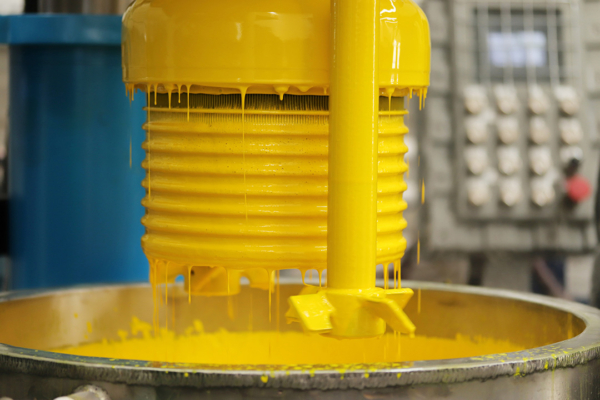
Luminultra introduces the Bugcount® analyzer ATP measurement platform, redefining the standard in microbial testing
The company’s flagship product combines 30 years of microbial expertise with trusted user feedback to produce a next-generation device built to streamline testing, accelerate decisions and strengthen control across critical systems.
Bugcount ,
Wastewater treatment , Drinking water , Legionella management , Microbial contamination , Efficiency loss and biofilm buildup , Biocide management and optimization , Protect product quality , Keep lines running , Stay ahead of MIC , Keep source water clean , Protect reservoir quality , Prevent biofilm build-up , Optimize biocide performance , Commercial aviation , General aviation , Marine , Fuel storage and distribution ,
Webinar on demand | Using ATP to monitor regrowth in drinking water distribution systems
Bugcount ,
Drinking water ,

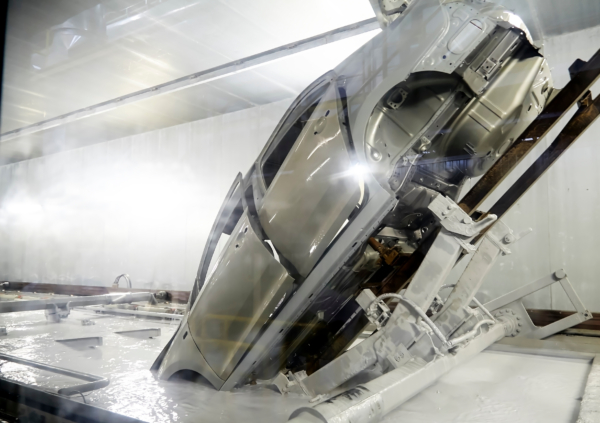
Costs and consequences of contaminated e-coat fluid in automotive manufacturing
Electrocoating (e-coat) is a cornerstone of modern automotive manufacturing, providing corrosion resistance and a uniform primer layer before painting. However, when the e-coat fluid becomes contaminated, the ripple effects can be severe—impacting product quality, operational efficiency and profitability.
Bugcount ,
Stay ahead of MIC , Keep source water clean , Protect reservoir quality ,

Seeing what other tests can’t: How EPCOR used ATP monitoring to strengthen drinking water operations
For drinking water utilities, keeping biologically stable water all the way to the customer’s tap is a daily challenge. Even with strong treatment processes, changes in temperature, flow, or stagnation can trigger microbial regrowth inside the distribution system. Traditionally, operators have relied on heterotrophic plate counts (HPCs) and disinfectant residuals to flag issues, but these […]
Bugcount ,
Drinking water ,
Luminultra strengthens position in European water diagnostics market with strategic acquisition of GL Biocontrol
The acquisition marks Luminultra’s eighth in eight years – each one a targeted step toward building a more comprehensive, client-focused solutions portfolio.
Bugcount , Labs ,
Drinking water , Legionella management ,
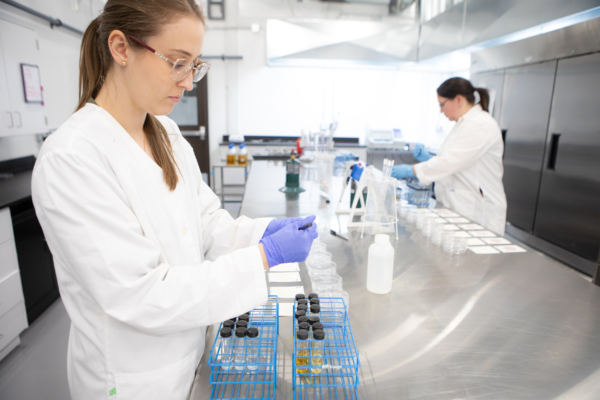
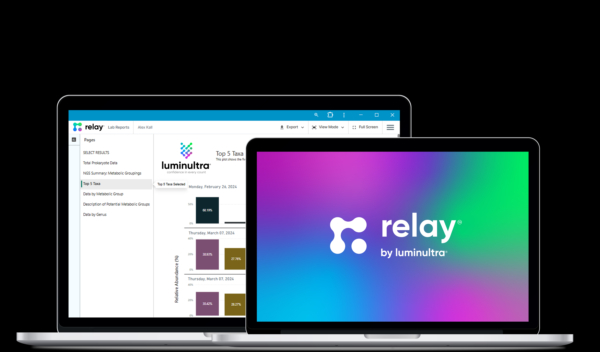
Relay™ by Luminultra
Relay™ is a value-add software tool that simplifies and guides your ATP testing, available at no cost to all customers.
Relay ,
Diagnosing inefficient biological phosphorus removal
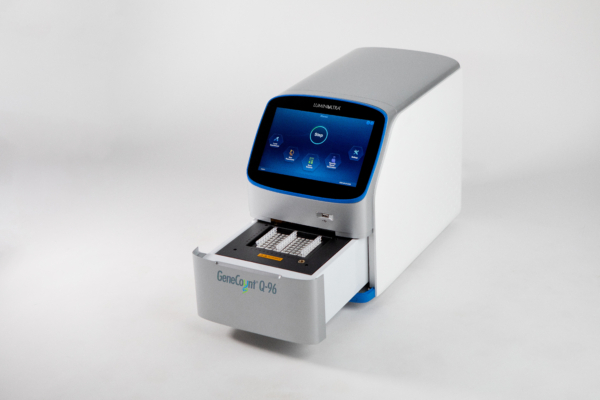
By leveraging Luminultra’s mail-in GeneCount services, a wastewater treatment plant was able to identify the underlying causes of poor biological phosphorus removal in one of their two bioreactors.
Genecount ,
Wastewater treatment ,


Not sure what you need? Let’s figure it out together
Talk to a Luminultra expert and get clear answers, fast.