













Explore our library of webinars, case studies and articles designed to help you solve microbial challenges with clarity and confidence. From practical how-tos to in-depth research, these resources give you the knowledge to make better decisions, faster.
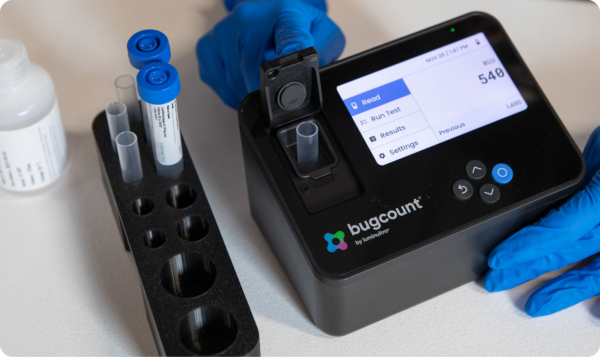
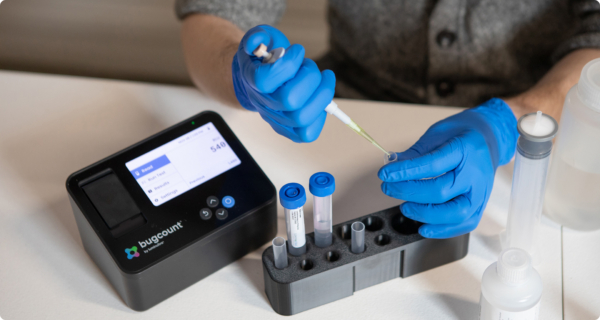
Luminultra introduces the Bugcount® analyzer ATP measurement platform, redefining the standard in microbial testing
The company’s flagship product combines 30 years of microbial expertise with trusted user feedback to produce a next-generation device built to streamline testing, accelerate decisions and strengthen control across critical systems.
Bugcount ,
Wastewater treatment , Drinking water , Legionella management , Microbial contamination , Efficiency loss and biofilm buildup , Biocide management and optimization , Protect product quality , Keep lines running , Stay ahead of MIC , Keep source water clean , Protect reservoir quality , Prevent biofilm build-up , Optimize biocide performance , Commercial aviation , Non-commercial aviation , Marine , Fuel storage ,
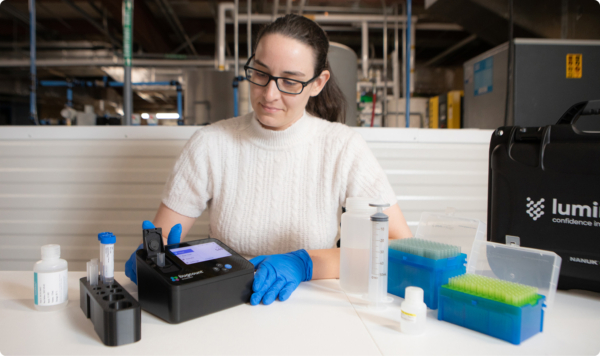
Upcoming webinar / Bugcount® analyzer: a live product demonstration
Tuesday, March 31 2:30 p.m. ET Register now Join Luminultra for a live demonstration of the new Bugcount® One ATP Analyzer, our latest platform for rapid microbial monitoring.
Bugcount ,
Wastewater treatment , Drinking water , Legionella management , Biocide management and optimization , Stay ahead of MIC , Keep source water clean ,
We bring microbial expertise and deep industry knowledge together to help you solve complex challenges and make confident decisions.


Whether you’re in the lab or in the field, we’re here to help you keep the work on track.

I need help getting started
Have a general inquiry or just need some direction? Send us your question and we’ll get you an answer

I need customer support
Need help with a product or test? Our customer experience team can help


Diagnosing inefficient biological phosphorus removal
By leveraging Luminultra’s mail-in GeneCount services, a wastewater treatment plant was able to identify the underlying causes of poor biological phosphorus removal in one of their two bioreactors.

By leveraging Luminultra’s mail-in GeneCount services, a wastewater treatment plant was able to identify the underlying causes of poor biological phosphorus removal in one of their two bioreactors.
Key takeaway
An Australian wastewater treatment plant’s operations staff were experiencing inconsistent phosphorus removal across their parallel anaerobic-aerobic bioreactors.
By conducting metagenomic analysis, they were able to identify the quantity (cell/mL) and relative abundance of phosphorus accumulating organisms (PAOs) and glycogen accumulating organisms (GAOs).
Learn more below, or contact us for details about Luminultra’s GeneCount Sample Preservation Kit and Next-Generation Sequencing services
Introduction
A wastewater treatment plant (WWTP) In Australia utilizes enhanced biological phosphorus removal to meet stringent effluent guidelines. The WWTP consists of two parallel anaerobic-aerobic bioreactors (Figure 1). Further phosphorus removal is providing using tertiary coagulation-media filtration.
Operations staff were experiencing issues with inconsistent biological phosphorus removal across the two bioreactors.
Bioreactor 1 was consistent achieving good biological phosphorus removal, while Bioreactor 2 was not.
To investigate why this was occurring, samples of the mixed liquor suspended solids (MLSS) were taken for metagenomic analysis to better understand the microbial community composition.
Samples were collected from both bioreactors and preserved using Luminultra’s GeneCount Sample Preservation Kit. This allows DNA to be concentrated and shipped in a small vial at ambient temperature, as opposed to cost-prohibitive cold chain transport, all while ensuring data integrity is maintained. Without proper preservation, the microbial community can shift, resulting in inaccurate findings.

Figure 1: Diagram of the bioreactors
In Luminultra’s DNA sequencing lab, samples were purified then two analyses were run:
- qPCR for Total Prokaryotes – which quantified the total number of prokaryotes (bacteria and archaea) in the sample in cells/mL
- 16S Illumina Sequencing – which identified and quantified (in relative to abundance) all prokaryotes in the sample
The two results were combined to calculate the quantity of each organism identified. The metabolic functions of the organisms were characterized using a literature derived database.
Results and Discussion
The organisms which were of importance to this study were phosphorus accumulating organisms (PAOs) and glycogen accumulating organisms (GAOs).
Under specific conditions, PAOs are able to remove phosphorus by accumulating and storing large quantities of polyphosphate. In contrast, CAOs compete with specific PAOs, such as Candidatus Accumulibacter, for vital volatile fatty acids (VFAs), thereby reducing the phosphorus removal efficiency of those organisms.
There were several PAOs and GAOs found in the samples. Results are shown in Table 1.
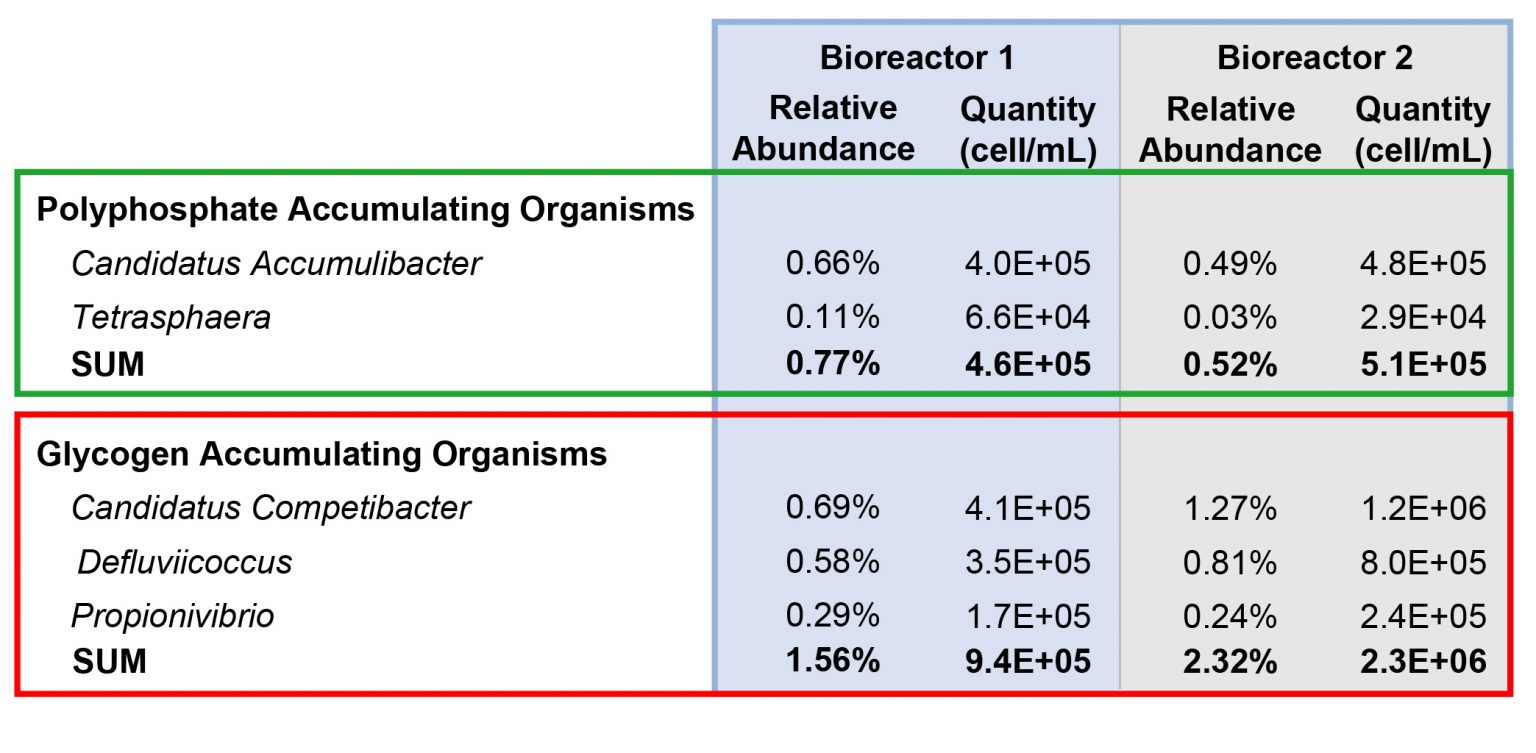
Table 1: PAO and GAO in each bioreactor
The most abundant PAO was Candidatus Accumulibacter.
Bioreactor 1 had a higher relative abundance of both PAOs compared to Bioreactor 2, however the total quantity was similar as Bioreactor 2 had a higher total prokaryote concentration.
This highlights the importance of examining the total quantity in addition to the relative abundance.
Bioreactor 2 had a much higher GAO relative abundance and quantity. The quantity in Bioreator 2 was 43% higher than Bioreactor 1. This suggests that GAOs are inhibiting phosphorus removal in Bioreactor 2. GAOs compete with Candidatus Accumulibacter for VFAs, which Candidatus Accumulibacter need to form polyhydroxybutyrate (PHB) storage products. PHB storage products provide energy for Candidatus Accumulibacter in aerobic environments to replicate and form intracellular polyphosphate bonds, thereby removing phosphorus from the wastewater.
Conclusion
Using metagenomic analysis, the underlying cause of poor phosphorus removal in Bioreactor 2 was identified.
In general, there was sufficient PAOs, but excessive GAOs which compete for essential VFAs and reduce treatment efficiency. The next steps are to investigate why GAOs proliferated in Bioreactor 2 but not Bioreactor 1. Factors to investigate are pH, influent carbon/phosphorus ratio, solids retention time, VFA type and temperature.
Explore Luminultra resources
Make confident decisions with trusted expertise.
Discover webinars, whitepapers and expert articles focused on microbial control.
Luminultra introduces the Bugcount® analyzer ATP measurement platform, redefining the standard in microbial testing
The company’s flagship product combines 30 years of microbial expertise with trusted user feedback to produce a next-generation device built to streamline testing, accelerate decisions and strengthen control across critical systems.
Bugcount ,
Wastewater treatment , Drinking water , Legionella management , Microbial contamination , Efficiency loss and biofilm buildup , Biocide management and optimization , Protect product quality , Keep lines running , Stay ahead of MIC , Keep source water clean , Protect reservoir quality , Prevent biofilm build-up , Optimize biocide performance , Commercial aviation , Non-commercial aviation , Marine , Fuel storage ,
Webinar on demand | Using ATP to monitor regrowth in drinking water distribution systems
Bugcount ,
Drinking water ,

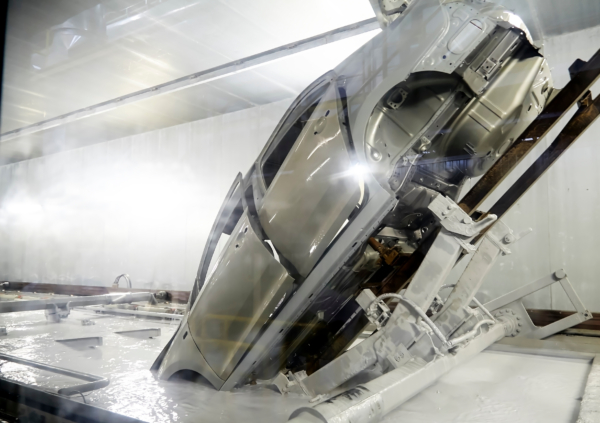
Costs and consequences of contaminated e-coat fluid in automotive manufacturing
Electrocoating (e-coat) is a cornerstone of modern automotive manufacturing, providing corrosion resistance and a uniform primer layer before painting. However, when the e-coat fluid becomes contaminated, the ripple effects can be severe—impacting product quality, operational efficiency and profitability.
Bugcount ,
Stay ahead of MIC , Keep source water clean , Protect reservoir quality ,

Seeing what other tests can’t: How EPCOR used ATP monitoring to strengthen drinking water operations
For drinking water utilities, keeping biologically stable water all the way to the customer’s tap is a daily challenge. Even with strong treatment processes, changes in temperature, flow, or stagnation can trigger microbial regrowth inside the distribution system. Traditionally, operators have relied on heterotrophic plate counts (HPCs) and disinfectant residuals to flag issues, but these […]
Bugcount ,
Drinking water ,
Luminultra strengthens position in European water diagnostics market with strategic acquisition of GL Biocontrol
The acquisition marks Luminultra’s eighth in eight years – each one a targeted step toward building a more comprehensive, client-focused solutions portfolio.
Bugcount , Labs ,
Drinking water , Legionella management ,
Relay™ by Luminultra
Relay™ is a value-add software tool that simplifies and guides your ATP testing, available at no cost to all customers.
Relay ,

Measuring living biomass in bioreactors with ATP monitoring
Bioreactors harness the ability of naturally-occurring microorganisms to break down environmental contaminants discharged from cities and industries.
Bugcount ,
Wastewater treatment ,
Understanding loss of nitrification at a refinery wastewater treatment plant using 16S rRNA sequencing
A refinery wastewater treatment plant was monitored over several years to investigate the loss of complete nitrification.
Labs ,
Wastewater treatment ,