












Explore our library of webinars, case studies and articles designed to help you solve microbial challenges with clarity and confidence. From practical how-tos to in-depth research, these resources give you the knowledge to make better decisions, faster.
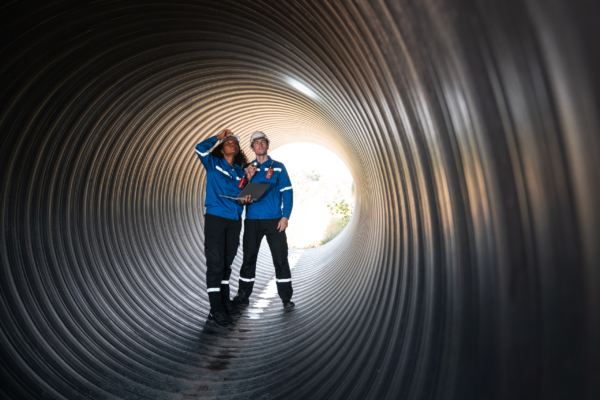
Protect Performance, Preserve Production: The Operator’s Guide to Microbial Risk Management
Bugcount , Genecount , Labs , Polytechnic , Relay ,
Stay ahead of MIC , Keep source water clean , Protect reservoir quality , Prevent biofilm build-up , Optimize biocide performance , Unified testing and reporting ,
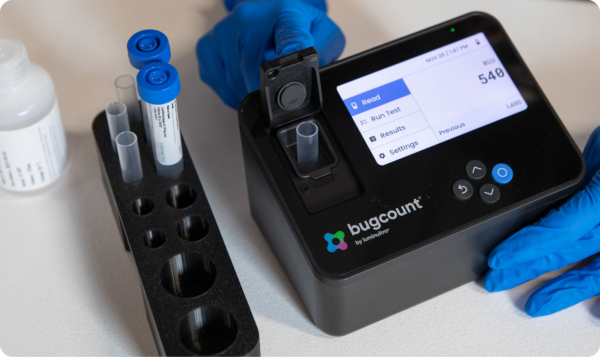
Luminultra introduces the Bugcount® analyzer ATP measurement platform, redefining the standard in microbial testing
The company’s flagship product combines 30 years of microbial expertise with trusted user feedback to produce a next-generation device built to streamline testing, accelerate decisions and strengthen control across critical systems.
Bugcount ,
Wastewater treatment , Drinking water , Legionella management , Microbial contamination , Efficiency loss and biofilm buildup , Biocide management and optimization , Protect product quality , Keep lines running , Stay ahead of MIC , Keep source water clean , Protect reservoir quality , Prevent biofilm build-up , Optimize biocide performance , Commercial aviation , Non-commercial aviation , Marine , Fuel storage ,
We bring microbial expertise and deep industry knowledge together to help you solve complex challenges and make confident decisions.


Whether you’re in the lab or in the field, we’re here to help you keep the work on track.

I need help getting started
Have a general inquiry or just need some direction? Send us your question and we’ll get you an answer
I need customer support
Need help with a product or test? Our customer experience team can help


Expert insights for smarter microbial control
Explore our library of webinars, case studies and articles designed to help you solve microbial challenges with clarity and confidence. From practical how-tos to in-depth research, these resources give you the knowledge to make better decisions, faster.

Cocktail party examples – Microbiologically induced corrosion
1142
Do you remember the news reports about the large oil spill in Prudhoe Bay that occurred back in 2006? On March 2nd, 2006, it was discovered that a BP-owned transit line supplying the trans-Alaska pipeline was leaking.
Converting qPCR results to resemble culture method results
1145
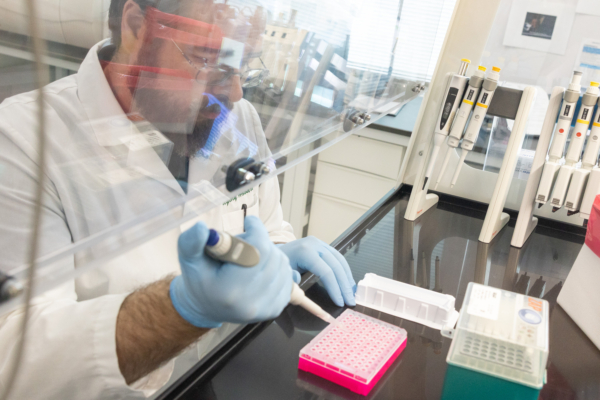
Since many operators like to have results reported in a format that is familiar to them, it is possible to convert the gene copies/mL obtained from a qPCR reaction into an approximate cells/mL which is a calculation based on the average amount of gene copies per organism determined from literature investigations.

Am I missing something? A look into the dangers of viable but nonculturable cells (VBNC)
1133
For over a century, lab technicians for water treatment facilities have turned to culturable plate counts as their main weapon in quantifying the bacterial count for a system.

Why won’t total microbial content decrease after UV treatment?
761
Compared to chlorine, which destroys the cell membrane, UV treatment is a physical process where UV light mutates and/or degrades DNA and RNA in bacterial and viral cells.

What is Legionella? Facts and figures about Legionella and Legionellosis
765
Legionella is the genus of bacteria that causes Legionnaires’ disease, a potentially fatal form of pneumonia (lung infection), and the less severe, flu-like Pontiac fever, named for the Michigan town where it was first described.
All you need to know about qPCR
759
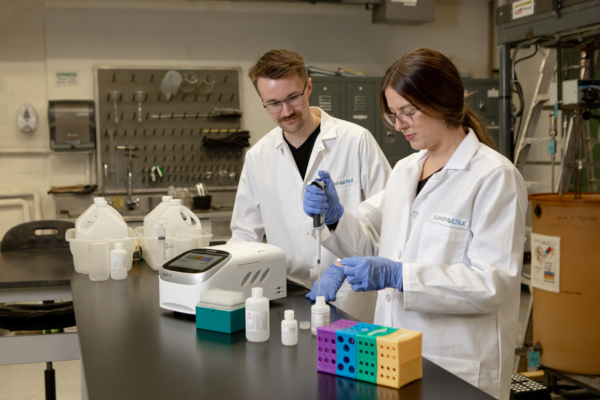
Quantitative Polymerase Chain Reaction (qPCR) is a DNA-based testing method that rapidly detects and quantifies microorganisms in environmental or industrial samples.

Using microbial source tracking to pinpoint the source of fecal contamination
690
Microbial source tracking is a suite of DNA-based techniques used to determine the sources of fecal bacteria in an aquatic environment, such as a lake, river or stream.


Not sure what you need? Let’s figure it out together
Talk to a Luminultra expert and get clear answers, fast.