














Explore our library of webinars, case studies and articles designed to help you solve microbial challenges with clarity and confidence. From practical how-tos to in-depth research, these resources give you the knowledge to make better decisions, faster.

Protect Performance, Preserve Production: The Operator’s Guide to Microbial Risk Management
Bugcount , Genecount , Labs , Polytechnic , Relay ,
Stay ahead of MIC , Keep source water clean , Protect reservoir quality , Prevent biofilm build-up , Optimize biocide performance , Unified testing and reporting ,
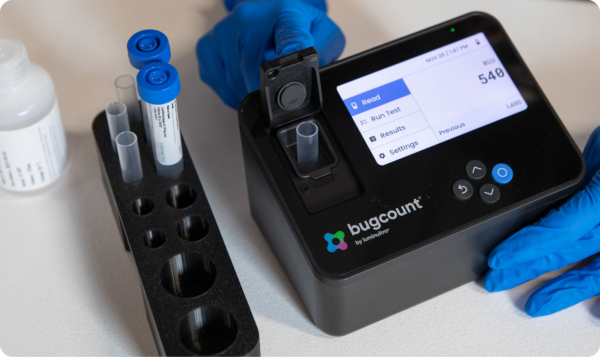
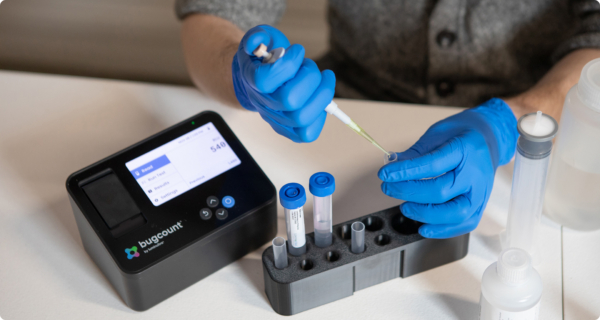
Luminultra introduces the Bugcount® analyzer ATP measurement platform, redefining the standard in microbial testing
The company’s flagship product combines 30 years of microbial expertise with trusted user feedback to produce a next-generation device built to streamline testing, accelerate decisions and strengthen control across critical systems.
Bugcount ,
Wastewater treatment , Drinking water , Legionella management , Microbial contamination , Efficiency loss and biofilm buildup , Biocide management and optimization , Protect product quality , Keep lines running , Stay ahead of MIC , Keep source water clean , Protect reservoir quality , Prevent biofilm build-up , Optimize biocide performance , Commercial aviation , General aviation , Marine , Fuel storage and distribution ,
We bring microbial expertise and deep industry knowledge together to help you solve complex challenges and make confident decisions.


Whether you’re in the lab or in the field, we’re here to help you keep the work on track.

I need help getting started
Have a general inquiry or just need some direction? Send us your question and we’ll get you an answer

I need customer support
Need help with a product or test? Our customer experience team can help

Protect performance, operations and profit: from reservoir to refinement.
Differentiate your service with proactive risk management.
Service companies are under growing pressure to help operators improve margins, meet emissions targets and maintain operational continuity, all while delivering consistent performance under increasingly strict service expectations. Microbial risk is one more variable that can’t be overlooked. Protect your clients and differentiate yourself with a defined approach to microbial testing.

Microbial risk is business risk
Delivering consistent performance while protecting margins and meeting client expectations requires tighter control than ever before. But microbial risks often go unnoticed until they begin driving corrosion, production disruptions and rising treatment costs. When downtime occurs, service companies are expected to respond quickly, maintain service commitments and keep operations moving without compromise.
Proactive microbial monitoring changes the equation. With the right strategy, service companies can detect contamination earlier, guide treatment decisions with better data and protect production before small issues become expensive failures.
Learn more in our guide: Protect Performance, Operations and Profit: The Service Company’s Guide to Microbial Risk Management
Microbial risk builds quietly, then disrupts visibly
When microbial testing is not prioritized, problems surface indirectly and expensively, increasing operational pressure, straining client relationships and putting contract performance at risk.
Escalating chemical spend without measurable proof of performance
Operators expect treatment programs to deliver measurable results. Without microbial data, service companies can struggle to demonstrate where treatment is working, where intervention is required and whether chemical spend is being optimized effectively. Proactive monitoring provides data-backed evidence that helps validate treatment decisions, strengthen client confidence and protect margins from unnecessary spend.
Repeated troubleshooting after failures or shutdowns
When microbial contamination is only investigated after disruption occurs, service teams are forced into reactive troubleshooting cycles that consume time, resources and credibility. Proactive monitoring helps identify changing microbial conditions earlier so issues can be managed before they escalate into operational failures, downtime or contract risk.
Reduced visibility into microbial activity across operations
Microbial contamination is rarely visible through standard operating indicators alone. Without reliable testing, service companies are often left making treatment recommendations based on assumptions instead of evidence. Routine monitoring provides the visibility needed to make faster, more informed decisions and maintain control across complex operations.
Slower alignment between operators and service partners
When operators and service companies do not share a standardized view of microbial activity, treatment decisions can stall and accountability becomes harder to establish. Consistent microbial testing creates a common data point that improves collaboration, simplifies reporting and helps stakeholders align faster on risk, treatment strategy and operational priorities.
Increased operational, reputational and compliance risk
Unmanaged microbial activity can contribute to corrosion, souring, biofouling and production disruption—all of which place additional pressure on service companies to meet contractual obligations and maintain operator trust. As operators increasingly prioritize long-term asset integrity, service companies are expected to demonstrate operational discipline, not just operational execution.
Microbial monitoring helps service teams detect threats earlier, validate their impact with data and protect both asset performance and service credibility before problems escalate.
Set clear standards for your operations and your clients
The service companies best positioned to protect performance and retain contracts are the ones treating microbial management as a business standard. Luminultra helps you implement proactive testing programs, standardized monitoring approaches and data-backed reporting that strengthen service credibility and demonstrate operational discipline to your clients.


Get strategic guidance on microbial risk management
Book a discovery consultation with Dr. Marc Demeter, Market Development Director at Luminultra.
Marc can help you identify practical next steps for building a more proactive microbial management strategy, from defining testing priorities to aligning teams, partners and decision-making around clearer standards.