













Explore our library of webinars, case studies and articles designed to help you solve microbial challenges with clarity and confidence. From practical how-tos to in-depth research, these resources give you the knowledge to make better decisions, faster.

Protect Performance, Preserve Production: The Operator’s Guide to Microbial Risk Management
Bugcount , Genecount , Labs , Polytechnic , Relay ,
Stay ahead of MIC , Keep source water clean , Protect reservoir quality , Prevent biofilm build-up , Optimize biocide performance , Unified testing and reporting ,
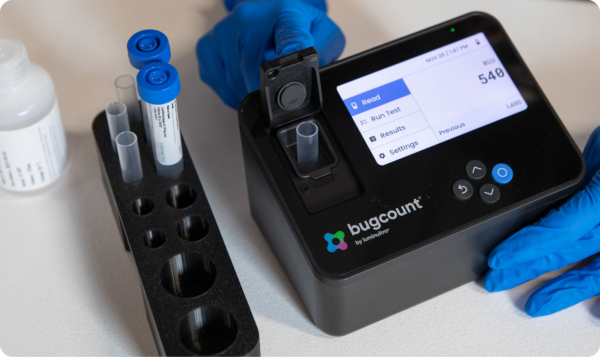
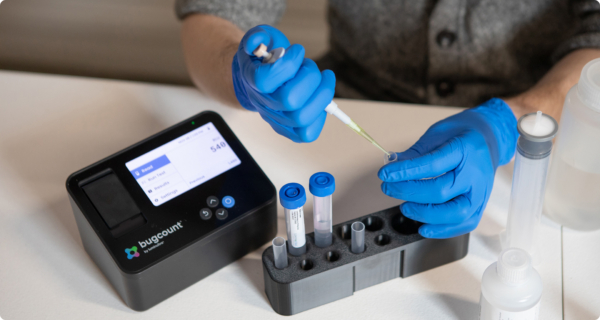
Luminultra introduces the Bugcount® analyzer ATP measurement platform, redefining the standard in microbial testing
The company’s flagship product combines 30 years of microbial expertise with trusted user feedback to produce a next-generation device built to streamline testing, accelerate decisions and strengthen control across critical systems.
Bugcount ,
Wastewater treatment , Drinking water , Legionella management , Microbial contamination , Efficiency loss and biofilm buildup , Biocide management and optimization , Protect product quality , Keep lines running , Stay ahead of MIC , Keep source water clean , Protect reservoir quality , Prevent biofilm build-up , Optimize biocide performance , Commercial aviation , General aviation , Marine , Fuel storage and distribution ,
We bring microbial expertise and deep industry knowledge together to help you solve complex challenges and make confident decisions.


Whether you’re in the lab or in the field, we’re here to help you keep the work on track.

I need help getting started
Have a general inquiry or just need some direction? Send us your question and we’ll get you an answer

I need customer support
Need help with a product or test? Our customer experience team can help


Are you choosing the right biocide? Or just the familiar one?
Your biocide program is only as good as the condition it’s designed for.

An industrial biocide is defined as a product that exerts a controlling effect on microbes by chemical or biological means. They destroy, render harmless, or otherwise prevent microbial activity in industrial applications. All biocides are effectively industrial-scale poisons, but it is important to recognize that not all biocides work in the same way. Some biocides destroy cell walls, resulting in a rapid, “emergency brake” type kill where microbial activity stops quickly (but not instantly). Others disrupt proteins and enzymes, inhibiting metabolic function and effectively cutting off the fuel supply, leading to a slower decline in activity and eventual cell death.
Yet in practice, many operators become dangerously comfortable with a single “favorite” biocide and deploy it across every application without question.
There are many reasons this happens: commercial agreements, pricing, availability, supply-chain positioning, or simple familiarity. The problem is that no two waters are the same and application conditions are not static. What worked previously may stop delivering results when fluid chemistry shifts, microbial populations evolve, or chemical compatibilities change.
Why biocide programs stop working
When biocide programs underperform, the root cause typically falls into one (or more) of three categories.
1. The microbial challenge has changed
Biocides are applied to kill microbes, but if the microbial challenge changes, is the program built to respond?
A biocide program designed for relatively fresh, sweet source water used in fracturing can quickly become ineffective when the system transitions to highly recycled produced water containing residual polymers, treatment chemicals, elevated iron, H₂S, and a three-log increase in microbial load. In these scenarios, the incumbent biocide may be overwhelmed, resulting in inadequate microbial reduction, eventual souring, and increased corrosion risk (rod and tubing failures).
Sometimes increasing dosage can compensate. Other times, an entirely different approach (or different chemistry) is required.
2. The same biocide is being used for a different job
Supply chain convenience often drives this mistake. A biocide that performs exceptionally well for MIC control in production or asset integrity may be repurposed for completions simply because it is available and cost-effective.
The issue is that these applications have fundamentally different objectives:
- Production / asset integrity: microbial control; accepting some level of microbial contamination while minimizing consequences.
- Completions: microbial prevention; avoiding microbial contamination altogether.
A low, or drawn-out dose designed for control is rarely appropriate where a high-impact shock dose is required. Using the right biocide in the wrong application, or at the wrong dose, can undermine both objectives.
3. Other chemistries are undermining performance
Biocide performance is frequently overlooked during compatibility testing.
Just as biocides can interfere with other chemistries, other chemistries can impair biocide efficacy, most often through loss of bioavailability. When biocide molecules are consumed or bound in alternate or unwanted reactions, fewer molecules remain available to kill microbes.
Examples include:
- Biocides that chelate iron in high-iron systems
- Charged biocides neutralized through charge-charge interactions
- Biocides consumed by H₂S scavenging or oxidation of organics
In each case, apparent under-performance is not a failure of the product, it’s a failure of application design.
A four-step framework for better biocide decisions
Do any of the above sound familiar? Well, the good news is that biocide selection does not need to be complicated or subjective. It does, however, need to be data-driven.
Here’s a structured framework I use consistently to select and apply biocides based on performance rather than preference:
Step one: Define what success looks like
Every effective biocide program starts with clarity of purpose. Identify the application and define success using measurable, defensible data—not subjective impressions.
Avoid vague objectives such as “good control” or “acceptable performance.” Instead, establish specific targets that can be demonstrated analytically.
Examples of objective KPIs include:
- ATP < 10⁴ ME/mL post-frac, sustained for six months
- qPCR confirmation of absence of souring-related microbes at 1- and 3-month intervals
- H₂S concentrations at the wellhead maintained below 10 ppm
If success cannot be measured, it cannot be defended or optimized.
Step two: Screen out the wrong biocides
Which chemistries are even worth testing?
With objectives defined, you know need to evaluate the application and screen potential biocides using functional categories, not brand familiarity or convenience.
This step is about elimination, not selection.
Key screening criteria include:
- Treating water versus protecting an asset
- Prevention mode versus control mode
- Required speed and duration of microbial mitigation
- Chemical characteristics and compatibility with the system
- Environmental conditions (pH, temperature, iron, H₂S)
- Safety, handling, and regulatory registrations
Only biocides that align with the application’s physical, chemical and operational realities should advance.
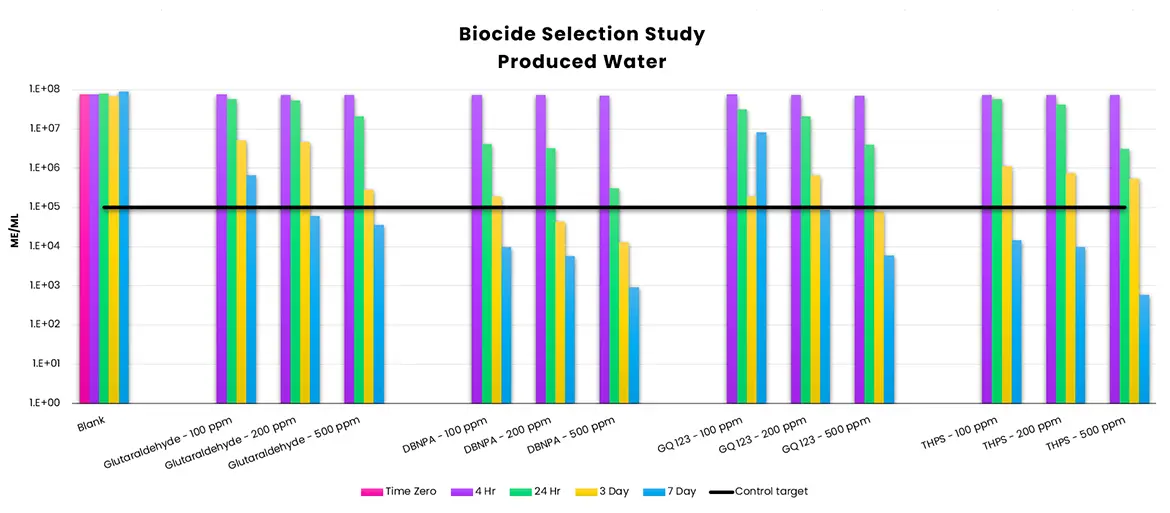
Example:
Step four: Apply, study and optimize
(Did it work, and how can it work better?)
Deploy the selected biocide program and evaluate performance against the original KPIs.
Ensure that your optimization is iterative and data-driven.
Consider:
- Injection location and method
- Pretreatment requirements (e.g., oxidizers)
- Retention time
- Dosage refinement
Compare collected data directly against objectives. Identify what worked, what didn’t, and what can be improved in real time or carried forward into future programs.
Four principles to carry into every biocide program
We’ve explored the fallacy of a single, static biocide approach for all applications, and replaced it with a structured, informed, biocide selection process. As you start to deploy these principles, here are some additional concepts for you to incorporate.
1. Biocides don’t know a “good” microbe from a “bad” one
Although mechanisms of microbial kill vary, industrial biocides used in oil and gas are inherently non-specific. In practice, this means they exert a killing effect across all microbial cell types, including: bacteria of all species and metabolic groups (including SRB, iron reducers and Halanaerobium), archaea (methanogens) and benign, non-problematic microbes alike.
No commercially available biocide selectively targets only the “troublemakers.”
2. More biocides doesn’t always mean better control
The concentration of active ingredient is critical to performance. Underdosing will fail to achieve the expected microbial reduction, while excessive dosing can result in diminishing returns, increased cost and unintended compatibility issues.
Optimization (not maximization!) is the objective. Regulatory-approved biocide product labels are a reliable starting point for dosage guidance.
3. Microbial growth (and kill) is exponential
Microbial populations grow exponentially, and therefore microbial measurement and mitigation must be considered on a logarithmic scale. When we count microbes, we focus on orders of magnitude, not absolute numbers.
Effective biocide programs aim to achieve exponential reductions in microbial load.
4. Kill Studies turn assumption into data
At the core of a defensible biocide program is a biocide selection study, commonly referred to as a Kill Study. The purpose of a Kill Study is to compare candidate biocides and dosages to determine which combination delivers the most effective and sustained microbial control.
Conducted under controlled laboratory conditions, kill studies use the actual water to be treated, with replicate samples dosed with candidate biocides and evaluated over time. ATP testing is used to directly quantify active microbial load reduction and assess true biocide efficacy.
Put these principals into action with our Kill Study Tool
Biocide decisions should reduce microbial risk, not introduce more uncertainty.
Luminultra’s Kill Study Tool is a practical spreadsheet designed to help you build and evaluate your own ATP-based Kill Study program. Input your study data to compare biocide performance, assess microbial reduction over time and generate quantitative insights into which treatments are delivering the results you need.
Use the tool to bring greater consistency to how Kill Studies are designed, evaluated and reported, giving your team clearer performance data to support biocide selection, dosage and treatment decisions.
Less uncertainty. More control over microbial risk.
Download our Kill Study Tool below now.
Explore Luminultra resources
Make confident decisions with trusted expertise.
Discover webinars, whitepapers and expert articles focused on microbial control.
Luminultra Applications Scientist Madison Tomlinson recognized with Chevron Research Award of Excellence
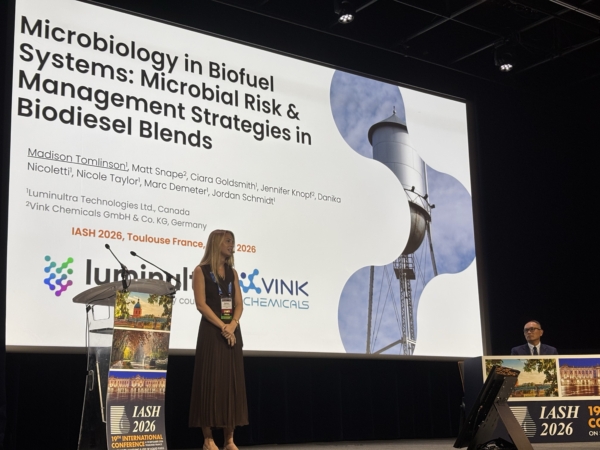
Research conducted in collaboration with Vink Chemicals explores microbial management strategies in biodiesel blends Fredericton, New Brunswick – September 9, 2026 – Luminultra is proud to announce that Applications Scientist Madison Tomlinson has been selected to receive the Chevron Research Award of Excellence in Honor of John Bacha from the International Association for Stability, Handling […]
Bugcount ,
Fuel storage and distribution ,
A practical primer on using DNA-based microbial diagnostics in oil and gas operations
DNA-based microbial diagnostics, such as quantitative PCR (qPCR) and next-generation sequencing (NGS), are increasingly used as routine tools in oil and gas operations. When combined with ATP testing, these methods allow operators and service companies to better understand microbial risks and apply targeted mitigation strategies as part of everyday field and facility workflows. At their […]
Bugcount , Genecount , Labs ,
Efficiency loss and biofilm buildup , Stay ahead of MIC , Prevent biofilm build-up ,
Webinar on demand | Oilfield Microbiology 101 – Foundations for microbial control in oil and gas
Bugcount , Genecount , Labs ,
Stay ahead of MIC , Keep source water clean , Protect reservoir quality , Prevent biofilm build-up , Optimize biocide performance ,

Luminultra introduces the Bugcount® analyzer ATP measurement platform, redefining the standard in microbial testing
The company’s flagship product combines 30 years of microbial expertise with trusted user feedback to produce a next-generation device built to streamline testing, accelerate decisions and strengthen control across critical systems.
Bugcount ,
Wastewater treatment , Drinking water , Legionella management , Microbial contamination , Efficiency loss and biofilm buildup , Biocide management and optimization , Protect product quality , Keep lines running , Stay ahead of MIC , Keep source water clean , Protect reservoir quality , Prevent biofilm build-up , Optimize biocide performance , Commercial aviation , General aviation , Marine , Fuel storage and distribution ,
Protect Performance, Preserve Production: The Operator’s Guide to Microbial Risk Management
Bugcount , Genecount , Labs , Polytechnic , Relay ,
Stay ahead of MIC , Keep source water clean , Protect reservoir quality , Prevent biofilm build-up , Optimize biocide performance , Unified testing and reporting ,
Protect Performance, Operations and Profit: The Service Company’s Guide to Microbial Risk Management
Bugcount , Genecount , Labs , Polytechnic , Relay ,
Stay ahead of MIC , Keep source water clean , Protect reservoir quality , Prevent biofilm build-up , Optimize biocide performance , Unified testing and reporting ,

Webinar on demand | Two-part series: Microbial risk mitigation and biocide application mechanics
Bugcount , Genecount , Labs , Polytechnic ,
Stay ahead of MIC , Keep source water clean , Protect reservoir quality , Prevent biofilm build-up , Optimize biocide performance ,

Rethinking water’s role in upstream oil and gas
I spend a lot of time talking about water and microbes, while trying not to sound too nerdy. Those conversations happen with stakeholders across the oil and gas industry: E&P operators, production chemical service companies, frac companies, water specialists and lab mangers. I have spoken with produced-water experts across North America, from the edges of […]

Download our Kill Study Template to optimize your biocide strategy
Bugcount ,
Optimize biocide performance ,

When it comes to microbes, “everything is everywhere”
Marc Demeter, our Director of Market Development, shares his expertise on managing microbial threats in the oil and gas industry.
Polytechnic ,
Stay ahead of MIC , Keep source water clean , Protect reservoir quality , Prevent biofilm build-up , Optimize biocide performance ,

Not sure what you need? Let’s figure it out together
Talk to a Luminultra expert and get clear answers, fast.